![KIN DENTAL CENTRE [CLEMENTI / WEST COAST]](https://kindentalcentre.com/wp-content/uploads/2021/10/colored-version-logo-horizontal_1-e1636957686352.png)
What are braces?
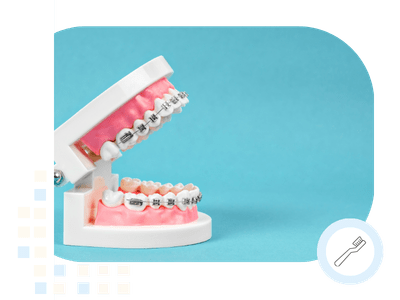
Braces are fixed orthodontic appliances made up of small brackets bonded to the front of each tooth and connected by a wire. The wire applies gentle, continuous pressure that gradually shifts teeth into a more aligned position. Braces cannot be removed during treatment — they work around the clock.
What is Invisalign?
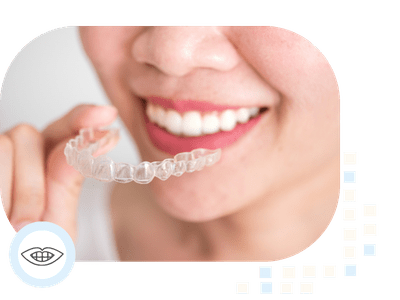
Invisalign is a system of custom-made, removable clear plastic aligners worn over the teeth. Each aligner moves the teeth a small amount, and you progress through a series of trays — typically changing to a new one every one to two weeks — until the desired alignment is achieved.
Because they are nearly invisible and can be taken out for eating and cleaning, many patients find them a convenient alternative to traditional braces. However, they must be worn consistently — at least 20 to 22 hours a day — to work as planned.
What is the difference between braces and Invisalign?
Appearance — Metal braces are visible. Invisalign aligners are clear and much less noticeable.
Removability — Braces are fixed. Invisalign aligners are removed for eating and cleaning.
Discipline required — Invisalign relies on you wearing the aligners consistently. Leaving them out too often means treatment will not progress as planned.
Suitability — Braces can treat a wider range of cases including more complex tooth movements. Invisalign works well for mild to moderate crowding, spacing, and bite issues. Your dentist will advise which is most appropriate for your needs.
What does orthodontic treatment involve?
(1) Consultation & Records
We take X-rays, photographs, and impressions or digital scans of your teeth. We assess your bite, jaw, and the position of each tooth. A personalised treatment plan and written quotation are provided — so you know exactly what to expect.
(2) Active Treatment
Braces are fitted in a single appointment and adjusted every four to six weeks. With Invisalign, aligners are changed at home on schedule. Both apply steady pressure to move teeth gradually into the planned position over months.
(3) Retainer Phase
Once the active phase is complete, retainers are essential. Without them, teeth have a natural tendency to drift back. Retainers are worn nightly long-term — either a removable clear tray or a fixed wire bonded to the back of the front teeth. This phase is for life.
How do I care for my teeth during treatment?
- Brush after every meal using a soft toothbrush and fluoride toothpaste. With braces, use interdental brushes to clean between brackets and under the wire.
- Floss daily — floss threaders or water flossers make this easier with braces. With Invisalign, brush your teeth before reinserting aligners.
- Rinse with a fluoride mouthwash daily to protect enamel throughout treatment.
- Attend your regular dental scaling and check-up appointments — orthodontic treatment does not replace routine dental care.
- With braces, avoid hard foods (nuts, ice, crusty bread) and sticky foods (toffee, chewing gum) that can damage brackets or dislodge wires.
- With Invisalign, remove aligners before eating or drinking anything other than plain water, and store them in their case — not wrapped in a tissue.
Is it painful? How long does treatment take?
Soreness and pressure for the first few days after braces are fitted or adjusted — and for one to three days each time you change to a new Invisalign aligner — is normal. Standard over-the-counter pain relief such as paracetamol or ibuprofen is sufficient for most patients. The discomfort reduces significantly after the first week as your mouth adapts.
Treatment length depends on the complexity of your case. As a general guide: mild cases around 6 to 12 months, moderate cases 12 to 18 months, and more complex cases 18 to 30 months or longer. Your dentist will give a personalised estimate at your consultation.
How Much Does Orthodontic Treatment Cost?
The cost depends on the type of appliance chosen, the complexity of your case, and the expected treatment duration. We provide a full written quotation at your consultation so there are no surprises. Please contact us to arrange an orthodontic assessment.


Opening hours
Mon – Thurs : 9am to 9pm
Fri, Sat & Sun : 9am to 5pm
Closed on Public Holidays
Privacy Policy
Location
West Coast / Clementi Branch
505 West Coast Drive
#01-214 S120505
* Please Google Map to “Kin Dental Centre” – as the above location may have tracking error on the app
Contact Us
Call us @ 69797978 / 80221068

© Copyright 2024 . Kin Dental Pte Ltd All Rights Reserved

