![KIN DENTAL CENTRE [CLEMENTI / WEST COAST]](https://kindentalcentre.com/wp-content/uploads/2021/10/colored-version-logo-horizontal_1-e1636957686352.png)
What is scaling and polishing?
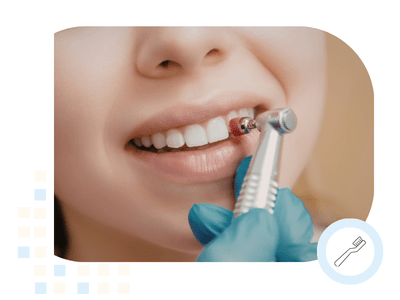
Scaling and polishing is a professional dental cleaning procedure carried out by a dentist or dental hygienist. It removes plaque, tartar (calculus), and surface stains from the teeth — deposits that regular brushing and flossing at home cannot fully remove on their own.
It is one of the most important preventive treatments in dentistry and forms the foundation of healthy teeth and gums throughout your life.
Why is scaling and polishing important?
Plaque and tartar that builds up along and beneath the gum line irritates and inflames the gums — this is gum disease, or gingivitis. If left untreated, gingivitis can progress to periodontitis, where the supporting bone around the teeth is affected, eventually leading to loose teeth and tooth loss.
Gum disease is very common and largely preventable. Regular professional cleaning, combined with good daily brushing and flossing at home, is the most effective way to keep your gums healthy and your teeth for life.
How often should I have scaling and polishing done?
For most patients with good oral health, every six months is the standard recommendation.
Some patients need more frequent cleaning — every three to four months — if they have a history of gum disease, are prone to heavy tartar build-up, wear braces, or have medical conditions such as diabetes that affect gum health.
Your dentist will recommend the most appropriate interval based on the condition of your gums and teeth at each visit.
How do I keep my teeth clean between appointments?
- Brush twice a day for at least two minutes each time, using a soft-bristle toothbrush and fluoride toothpaste. Replace your toothbrush every three months.
- Floss once daily — either with traditional floss, floss picks, or a water flosser. Flossing removes plaque from between teeth where a toothbrush cannot reach.
- Rinse with a fluoride mouthwash daily for added protection, particularly if you are prone to decay.
- Limit sugary and acidic food and drinks between meals. Frequent snacking keeps acid levels high and accelerates plaque formation.
- Do not smoke — smoking dramatically increases the rate of tartar build-up, masks gum inflammation, and is a major risk factor for gum disease.
- Attend your professional scaling and check-up appointments at the interval recommended by your dentist.
Is scaling safe? Will it damage my teeth? Why do my gums bleed?
Yes, scaling is safe when performed by a trained dental professional. It removes tartar attached to the tooth surface — it does not remove healthy tooth structure.
Some patients notice that after scaling, the spaces between their teeth look larger or their gums look lower. This is not damage — it is because the swollen gum tissue has reduced in size as the inflammation settles, revealing the tooth structure that was always there, previously hidden beneath inflamed gums.
Bleeding during scaling is almost always a sign that the gums are inflamed due to plaque and tartar irritation — not a sign that the cleaning is causing harm. Healthy, well-maintained gums do not bleed easily. With regular cleaning and improved home care, bleeding typically reduces significantly within a few weeks.
How Much Does Scaling and Polishing Cost?
The cost of a professional cleaning appointment at Kin Dental Centre depends on the amount of tartar build-up and whether any additional gum treatment is needed. On average the cost range from $70 to $150. Please contact us to enquire or to arrange an appointment.
Scaling and polishing can be covered under the CHAS scheme for Orange , Blue , Mederka and Pioneer Generation card holders . Kindly , contact us to learn more.


Opening hours
Mon – Thurs : 9am to 9pm
Fri ,Sat & Sun : 9am to 5pm
Closed on Public Holidays
Privacy Policy
Location
West Coast / Clementi Branch
505 West Coast Drive
#01-214 S120505
* Please Google Map to “Kin Dental Centre” – as the above location may have tracking error on the app
Contact Us
Call us @ 69797978 / 80221068

© Copyright 2024 . Kin Dental Pte Ltd All Rights Reserved

